OnePass replaces the clipboards, the carpool walkie-talkies, the hall pass binder, and the eight tabs of half-broken legacy SaaS that hold the day together. Built for the bus loop attendant, the front desk nurse, and the substitute who walked in cold.
OnePass takes the workflows that already exist in your school — running on radios, sticky notes, and the muscle memory of veteran staff — and gives them shared state, real-time updates, and a UI built for one-handed use during a fire drill.
A camera at the front of the loop reads license plates as cars approach. Families auto-populate the queue with their assigned students. Staff dismiss with a single tap from a phone, tablet, or kiosk. Parents see exactly where they are in line.
Issue a hall pass in three taps. Live timers run on every staff device, so the nurse, front office, and SRO all see who's out and how long they've been gone. Overdue passes auto-flag — no more "wait, where's that kid?"
Attendance built for actual K–12 schedules — A/B days, block periods, advisory time, sub-friendly UX. Students tap an NFC card to a tablet at the door. Substitute teachers can run a class on day one with no training.
Lockdown, fire, weather shelter, secure-perimeter — initiated from any admin device, pushed to every staff phone in the building. Per-room acknowledgment confirms which rooms received and processed the alert.
Visitors sign in on the front desk tablet, get a printed badge with photo and reason, and the staff member they're seeing gets a real-time notification. Sex offender list screening optional. State compliance handled.
A staff member taps a student name and sees: guardians, schedule, attendance pattern, dietary flags, medical notes, hall pass history, accommodations, emergency contacts — all from one screen, all live, all FERPA-audited.
Ask "who's still in lunch?" or "any students unaccounted for in the drill?" — get a real-time answer drawn from every other module. Built for the staff member who shouldn't need to learn another query syntax.
One backend, one codebase, six native platforms. Staff don't have to learn a different UI on a different device, and IT doesn't have to support seven separate vendors. We picked native everywhere because web shims fall apart at the worst time — and "the worst time" at a school happens daily.
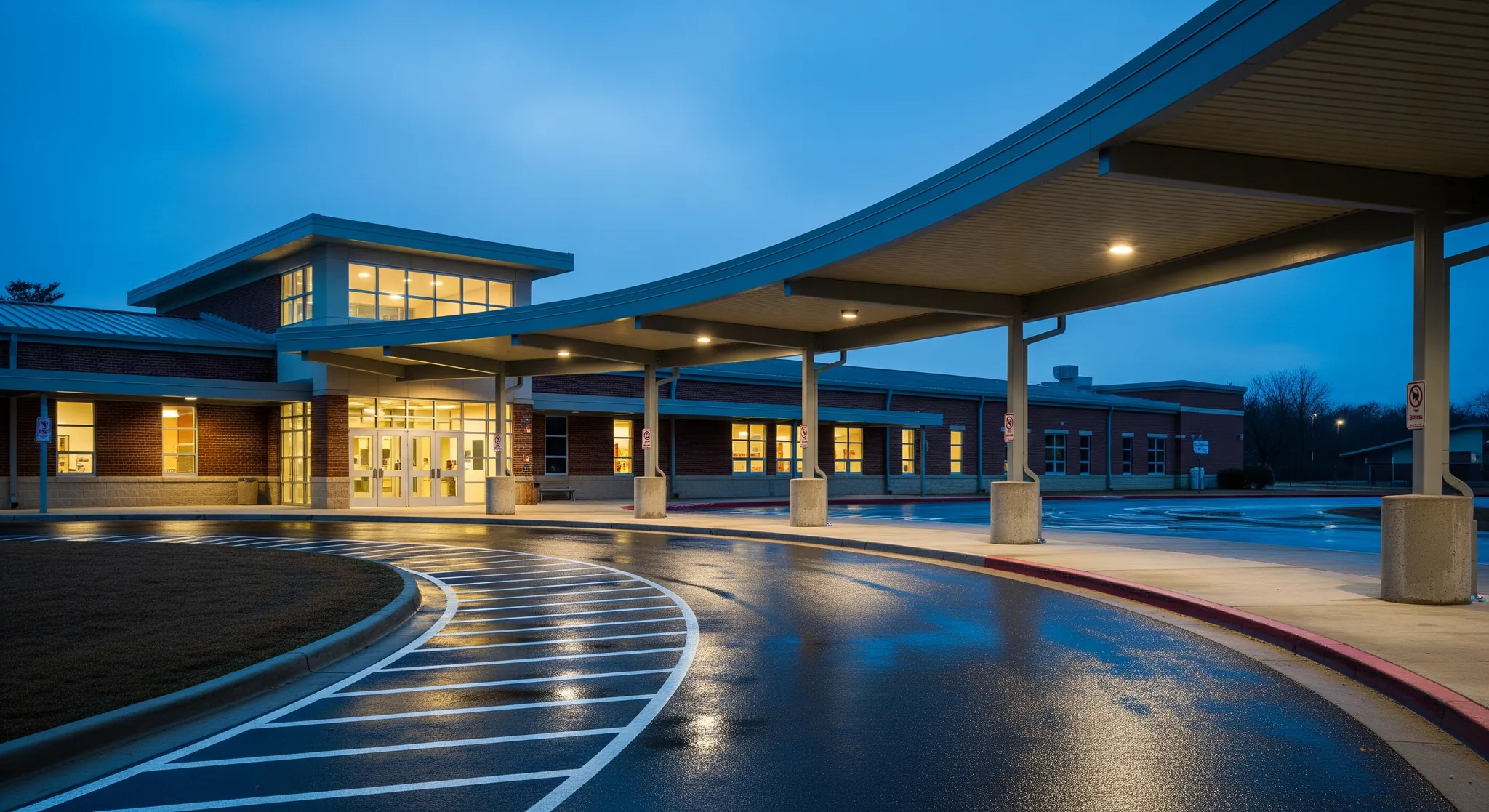
Most edtech is built in a coffee shop with fiber WiFi and breaks the moment a teacher's iPad disconnects. We tested OnePass in the rain at carpool with the access point unplugged. The day kept running.
Local caching on every staff device. Hall passes, attendance, dismissal continue to work offline; state reconciles when the network returns.
Lost connections auto-reconnect with exponential backoff. Cross-device state catches up without user action.
A tap reflects instantly, even before the server confirms. Failures fall back gracefully — staff never wait on a spinner.
Zero embedded SDKs. No Mixpanel, no Segment, no Sentry, no analytics-driven app slowness on a 3-year-old tablet.
Two staff dismissing the same student at the same time? Server is the source of truth; clients reconcile, no duplicate events.
Built to handle the dismissal-window spike — 200+ vehicles, 800+ live socket connections, simultaneous staff actions across 6 device types.
OnePass pulls roster, schedule, family relationships, and guardian contact info from your existing student information system. We don't try to replace it — we make it useful at 7:45 AM.
Integration is standard API or nightly CSV — whatever your district has the budget and patience for. Setup takes a day, not a quarter.
Student records live on dedicated cloud infrastructure operated by Unified Campus Systems in the United States. The school owns the data; we operate the platform under a Data Processor Agreement, FERPA-compliant by default.
Student data is never sold, never shared, never used to train external AI models. Every staff data access is audit-logged. Family-facing AI features run inside your data boundary.
OnePass is in active pilot at Imagine International Academy of North Texas. We're opening additional pilots for the 2026–2027 academic year, with rollouts starting at single-campus deployments.